
Botanical · Food · Nutraceutical · Pharmaceutical
Psyllium
Husk
India's finest soluble fibre ingredient — exported from the Gujarat belt to manufacturers worldwide.
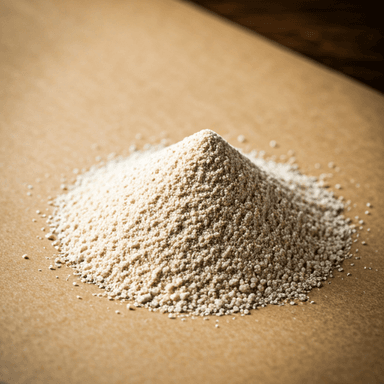
Plantago ovata
Origin: Gujarat & Rajasthan, India
Product Overview
What is
Psyllium Husk?
Psyllium Husk (known as Isabgol in India) is the outer seed coat of Plantago ovata , a fibrous herb cultivated extensively in India's Gujarat and Rajasthan states. India accounts for over 85% of the world's psyllium production, making it the undisputed global origin for this ingredient.
When psyllium husk comes into contact with water, it swells and forms a viscous gel — a property driven by its exceptionally high content of arabinoxylan polysaccharides. This unique behaviour makes it valuable across food, pharmaceutical, and nutraceutical applications as a bulking agent, thickener, and dietary fibre supplement.
Dense Origins sources directly from established cultivation regions, processes under controlled conditions, and supplies with full traceability documentation — ensuring every batch meets the specification your formulation demands.
| Botanical Name | Plantago ovata |
| Common Names | Isabgol, Ispaghula, Blond Psyllium |
| Plant Part Used | Seed husk (testa) |
| Origin | Gujarat & Rajasthan, India |
| Available Grades | 85%, 90%, 95%, 99% purity |
| Forms Available | Whole husk, powder (various mesh sizes) |
| Colour | Cream to light golden |
| Moisture | ≤12% (testing available per batch) |
| Certifications | CoA · MSDS · Phytosanitary · Halal/Kosher on request |
| Packaging | 25 kg / 50 kg bags · Custom · Private label |
| MOQ | Flexible — contact us |
| Shelf Life | 24 months (properly stored) |
Quality Spectrum
Available
Grades
Standard Grade
For general food and feed applications. Most economical option suitable for animal nutrition and commodity food products.
- Animal nutrition
- General food use
- Bulk commodity
Food / Nutraceutical Grade
The industry standard for dietary supplements, functional foods, and over-the-counter laxative formulations. Meets most international pharmacopoeia standards.
- Dietary supplements
- Functional foods & beverages
- Gluten-free baking
- Protein bars & cereals
Pharmaceutical Grade
Highest purity for regulated pharmaceutical applications. Meets USP, BP, and EP standards. Full documentation package available.
- Pharmaceutical laxatives
- Prescription formulations
- Clinical nutrition
Applications
Where it's
used
Pharmaceutical Laxatives
Psyllium Husk is the active ingredient in leading OTC laxative brands globally. Its gel-forming property softens stool and promotes regular bowel movement without irritating the intestinal wall.
Functional Foods & Beverages
Used in high-fibre cereals, protein bars, smoothie mixes, and meal replacement drinks to boost fibre content. Its water-absorbing property improves satiety and texture.
Gluten-Free Baking
A critical binder and texturizer in gluten-free bread and baked goods. Psyllium husk forms a gel that mimics the elasticity of gluten, improving dough structure and crumb texture.
Nutraceutical Supplements
Encapsulated or powdered for dietary supplement products targeting digestive health, cholesterol management, blood sugar control, and weight management.
Animal Nutrition
Lower-grade psyllium is used in animal feed to improve gut health, reduce digestive upset, and support bowel regularity in livestock and companion animals.
Cosmetic Formulations
Psyllium seed extract and husk are used as thickeners and texturizers in hair gels, skin masks, and topical cosmetic formulations seeking natural alternatives to synthetic polymers.
Composition
Nutritional &
Technical Profile
Per 100g of Psyllium Husk (indicative values — batch CoA provided on request)
| Dietary Fibre (Total) | 70–88 g |
| Soluble Fibre | ~67 g |
| Insoluble Fibre | ~3–21 g |
| Protein | ~2.1 g |
| Total Carbohydrates | ~80 g |
| Fat | ~1 g |
| Moisture | ≤12 g |
| Ash | ≤4 g |
| Swelling Factor | ≥40 mL/g (90% grade) |
| Caloric Value | ~200 kcal |
*Values are indicative. Full Certificate of Analysis provided with every shipment.
Origin Story
History &
Heritage
Psyllium has been used in Ayurvedic medicine for over 2,000 years under the name Isabgol — derived from the Persian words isap (horse) and ghol (ear), describing the shape of the seed. Traditional Indian medicine prescribed it for digestive ailments, dysentery, and urinary disorders.
Commercial cultivation in India began in the early 20th century in the Mehsana and Patan districts of Gujarat — a semi-arid climate with sandy, well-drained soil that turned out to be uniquely ideal for the crop. Today, India's Gujarat and Rajasthan states collectively produce over 85% of the world's psyllium supply.
The global breakthrough came in the 1990s when the US FDA approved a health claim allowing psyllium products to state their role in reducing the risk of heart disease — triggering explosive demand from food and supplement manufacturers worldwide. Dense Origins was founded to serve this global demand with the authentic Gujarat-origin ingredient.
Key Fact
India produces over 85% of the world's psyllium husk supply, and Gujarat alone accounts for roughly 60% of that — making it the true origin heartland for this global ingredient.
FDA Health Claim (1997)
"Diets low in saturated fat and cholesterol that include 7 grams of soluble fiber per day from psyllium husk may reduce the risk of heart disease." — U.S. Food & Drug Administration
Clearing the Air
Myths
Debunked
"Psyllium Husk is only useful as a laxative."
Psyllium husk is a versatile functional ingredient used in food formulation (baking, beverages), cholesterol management, blood sugar regulation, and weight management. The laxative application is just one of many.
"All psyllium husks are the same quality."
Psyllium quality varies significantly by purity grade (85%–99%), swelling factor, moisture content, and particle size. Inferior grades contain higher husk impurities and lower fibre content — which is why a third-party CoA is essential.
"Psyllium Husk contains gluten."
Psyllium Husk is naturally 100% gluten-free. It is in fact widely used because of its gluten-free status — as a binding agent in gluten-free baked goods that would otherwise fall apart without wheat gluten.
"Indian psyllium is lower quality than imported varieties."
The opposite is true. India's Gujarat belt produces the gold-standard global supply. "Blond psyllium" from India meets USP, BP, and EP pharmacopoeia standards and is the reference material used by regulatory agencies worldwide.
Product FAQ
Common Questions
What is the difference between Psyllium Husk and Psyllium Seed?
Psyllium Husk is the outer coating (testa) of the Plantago ovata seed and is the commercially valuable part — containing the high-fibre arabinoxylans. Psyllium Seed is the whole seed including the inner dark seed. The husk contains approximately 30× more fibre than the seed and is what Dense Origins supplies.
What purity grades do you offer and which should I choose?
We offer 85%, 90%, 95%, and 99% purity grades. For food and dietary supplement applications, 90%–95% is the industry standard. For pharmaceutical-grade regulated products, 99% purity meeting USP/BP/EP specifications is required. We can provide technical guidance based on your specific formulation.
Is organic Psyllium Husk available?
Yes. Dense Origins can supply certified organic Psyllium Husk with organic certification documentation. Organic variants are available in 90% and 95% purity grades. Contact us for pricing and minimum quantities for organic supply.
What documentation comes with a shipment?
Every shipment includes a Certificate of Analysis (CoA) from an accredited third-party laboratory, Material Safety Data Sheet (MSDS), and phytosanitary certificate. Halal and Kosher certificates are available on request. For pharmaceutical orders, additional documentation can be arranged.
What is the shelf life and how should Psyllium Husk be stored?
Properly stored, Psyllium Husk has a shelf life of 24 months. It should be stored in a cool, dry place away from direct sunlight and moisture. Our packaging is designed to maintain this shelf life — we use moisture-barrier bags with resealable options available.
Ready to source
Psyllium Husk?
Derived from Plantago ovata cultivated in India's Gujarat and Rajasthan belts. A powerhouse soluble fibre for functional foods, dietary supplements, and pharmaceutical formulations. Gluten-free, organic variants available.